Posts

Lexical Addition - Doomscrolling & Doomsurfing
Image
 By Ms.M.N.Viveka The Covid 19 pandemic has brought the world to its knees. In consequence, it brought about huge shifts in our way of life and also altered the lifestyle of people. The human race is experienced in transforming challenges into opportunities. Hopefully, this crisis will also be used to recreate something new and more humane. The First major change Covid has brought in is the shift from offline to online in everything especially traditional, face to face teaching learning to online virtual mode. The surge in sign up for online courses is greater than ever. The Second major fact is personal hygiene. Washing hands, sanitizing things before use and wearing mask while going out has become a habit. The third major change that has become a part of our life is working from home.     In this uncertain situation there are so many things happening around and we cannot stop ourselves from paying attention to certain sad or bad news though it may be depressing. This ga...

What would Nature want post Covid19? – “Biomimetics”

Image
 By Dr.P.Sangeetha “We’re seeing a bit of Utopian glimmer coming through, and natural selection chooses what works over and over. So, when we get back to normal, we get this glorious choice to put back in our lives only what is best, only what we found made life worth living.” We’ve just been eating through [the planet] and colonizing it. And we’re spillover prone-or virus prone- right now. Life’s natural defenses –its immune system –which normally keeps everything in balance, has been threadbare. “Viruses are all around us. In a square meter, 800 million viruses a day fall from the sky. They are a hugely important part of our world and our evolution. But these pandemics happen when the natural defenses are broken. Meanwhile the climate change is just putting everything under stress. So we’ve got this natural system that is out of kilter.” Our current plight should encourage a rethink about how human systems-both economic and social-might ease the strain on our natural system....

NEO BANK – RISE OF THE INVISIBLE BANK

Image
 By Mrs.S.Johnsi A   digital - only bank   provides banking facilities exclusively through digital platforms, such as mobile, tablets, and the Internet. These digital banks offer services using electronic documentation and automated processes. Technology changes the way with which cash and cheques are deposited and payments and money transfers are carried out in these banks. So, digital banks have emerged as an influential choice for the young generation. The top two digital banks and the key features is discussed in this article.   1.    MONZO BANK Monzo is an online bank in the United Kingdom. It was founded by Tom Blomfield, Jonas Huckestein, Jason Bates, Paul Rippon and Gary Dolman in 2015. It originally operated with a mobile app and a pre paid debit card. From 2017 the bank started to offer deposit accounts. By providing excellent customer service Monzo differentiates it with all other banks and has reached 40,00,000 customers. The key features of...

Tokenising Business – Taking the ICO route

Image
By Dr.Deepa Venugopal In February 2018, Mumbai based Drivezy – A Peer to Peer car and bike rental platform raised $5 million in the first round of its Initial Coin Offering -ICO. The company used Rental Coins 1.0 as its private cryptocurrency token to raise money from investors and HNIs based out of Singapore and Japan. In the recent past,numerous Start-ups have successfully integrated blockchain technology into their business and has taken the ICO route to raise funds for their business.   An ICO is a novel method of fund raising for start-ups by issuing digital tokens. This issuing of digital coins is known as Tokenisation in the crypto world. A Token represents something “particular” in the business ecosystem. This could be a value, service, voting rights etc.Are crypto currency and tokens one and the same? The answer is No. A cryptocurrency has a value outside their indigenous environment. But tokens are based (derived from)on an existing smart contract platform like Ethereum...

The Glass Cliff Phenomenon

Image
By Dr.J.J.Savithri All of us have heard of the Glass Ceiling, the invisible barrier that prevents women from rising to the highest position in an organization . Women in the Workplace 2019 , a study undertaken by McKinsey and LeanIn.Org indicated that only 34% of senior management comprised women and as we move up to C-level positions, this number dipped to 21%. But, there are women who break through the glass ceiling particularly when an organization is facing a crisis. However, they often fall victim to the “glass cliff”. An addition to the workplace vernacular is the ‘glass cliff”. British Professors Michelle K. Ryan and Alexander Haslam of the University of Exeter, United Kingdom, coined the term in 2005. In 2003, U.K.’s  Times  published a report stating “corporate Britain would be better off without women on the board” after analyzing the performance of 100 companies on the London Stock Exchange, and concluded that those with the most women we...

Data-driven decision making through Business Intelligence

Image
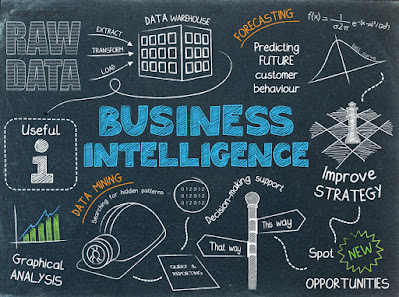
By Dr.S.T.Nambi What is Business Intelligence? The term Business Intelligence (BI) was first coined by Richard Miller Devens in 1865 to describe how a successful banker named Sir Henry Furnese established a network of information to beat competitors. Furnese’s network of informant merchants scattered throughout Western, Central, and Northern Europe disseminated information to him faster than it could reach any of his competitors, thus allowing him to act on the intelligence and turn major profits. In 1958, a researcher named Hans Peter Luhn used the term to describe an automated system of disseminating information between the different sections or divisions of an organization. In 1989, Howard Dresner - a research fellow at Gartner Group, used the term business intelligence as “the concepts and methods to improve business decision-making by using fact-based support systems.” Today, BI refers to a technology-driven process for analyzing data and disseminating actionable information ...

IS RETURN ON EXPERIENCE (ROX) THE BRAND-NEW FINANCIAL METRIC TO WATCH OUT FOR?

Image
By Dr.Deepa Venugopal Managing today’s astute and compelling customers is no child’s play. Present day organisations have understood that investing in Customer Experience (CX) would help in building better products, processes and services which in turn can drastically improve the financial performance and KPI’s. Return on Investment (ROI) is a time-honoured financial metric which assesses the monetary gains from an investment made. But in the contemporary business world where customers call the shots it’s time to welcome another metric named Return on Experience (ROX). So how is ROX better than ROI? Studies reveal that more than 75% of the customers would happily repeat a purchase from a company if they know their name, purchase history and recommend the products based on their preferences. Consequently, this would mean that organisations are in search of metrics which can effectively measure Customer Engagement (CE).While ROI is built on a ‘narrow’ concept of cash outflow V...